Local discovery is fragmented and unreliable, causing users to miss relevant opportunities and making it difficult to trust the information they find. As a result, users hesitate to engage, and local businesses struggle to reach the right audience.
I designed a more structured experience that helps users discover opportunities, evaluate business credibility, and take action seamlessly in one place.
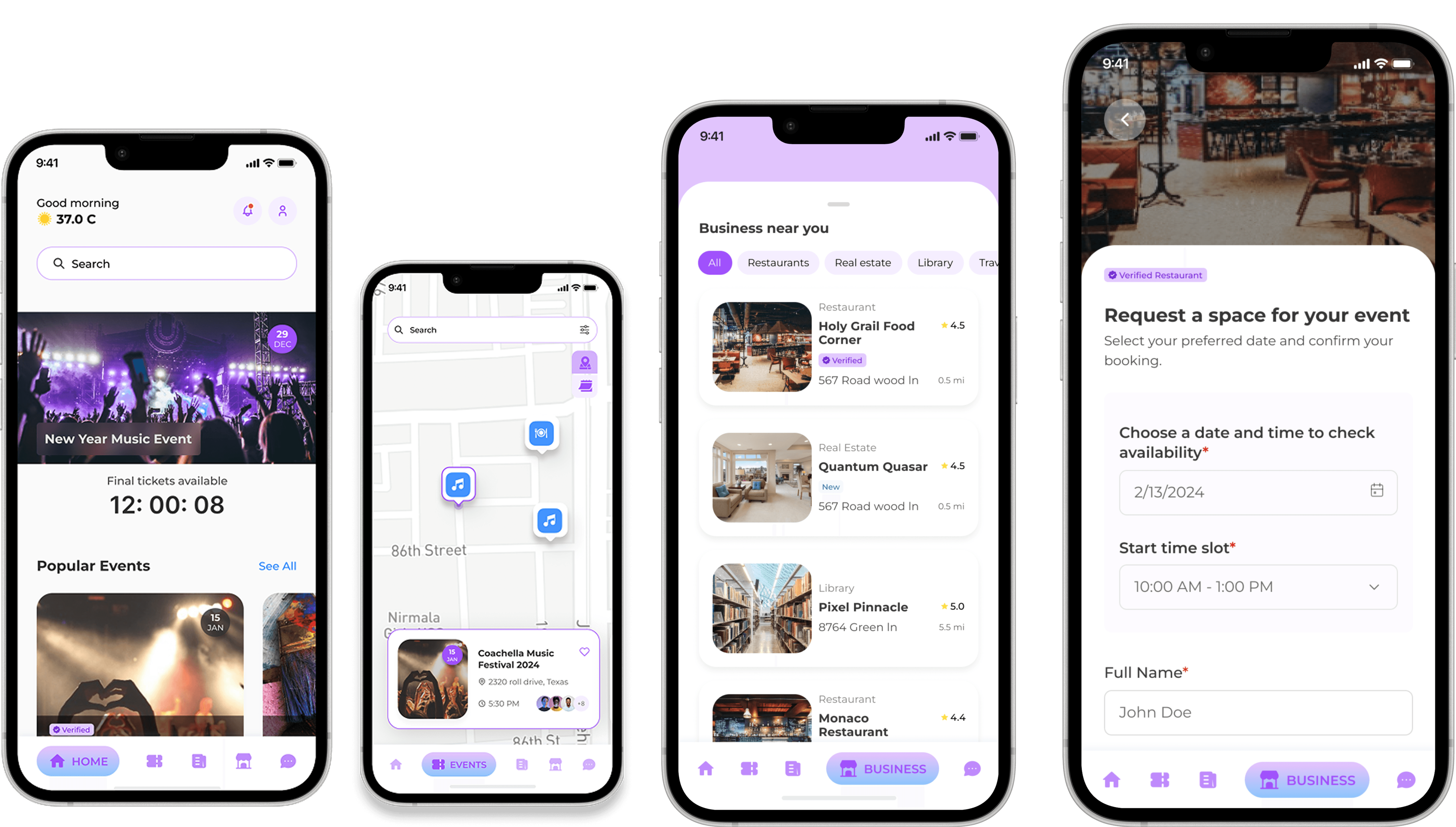
The Problem
While platforms exist for events, jobs, and local services, they operate in isolation, forcing users to switch between them. The information they encounter is often inconsistent and difficult to verify. This creates two key challenges:
Fragmented discovery — opportunities are spread across platforms with no clear structure.
Lack of trust — users struggle to determine which information is reliable.
As a result, users hesitate to engage, while businesses struggle to reach the right audience.
My Role
Product Designer
Platform
Mobile Application
Scope
Consumer + Business + Admin
Team
UI/UX - Arati Ghimire
Developer - MA Dev team (5 members)
Tools
Figma, Figjam, Google docs
System Overview: Connecting Consumers, Businesses, and Trust
The platform connects three roles that work together to support discovery, evaluation, and engagement.
Consumer (Primary User)
Consumers explore local opportunities such as events, jobs, and services. Their journey focuses on finding relevant options, evaluating credibility, and engaging with confidence.
Business (Content Creator)
Businesses create and manage listings including events, job postings, and services. Their goal is to reach the right audience and convert interest into engagement.
Admin (Trust Layer)
Admins maintain quality and reliability by moderating content, approving listings, and ensuring consistency across the platform.
How the System Works
Businesses publish opportunities that are reviewed before being surfaced to users. On the consumer side, structured discovery and visible trust signals help users evaluate credibility before engaging. This creates a loop where reliable content drives engagement, and engagement reinforces trust in the platform.
Business
Create Listing
Admin
Reviews / Approves
Consumer
Discovers
Evaluates
Engages
Engagement
(Message / Apply / Book)
Feeds Back into System (Trust & Activity)
FLOW 1 : DISCOVER
Discovering Relevant Local Events
Users rely on scattered sources to find local events, making it difficult to identify what is relevant, trustworthy, and worth attending.
This leads to slow decision-making and low engagement with nearby opportunities.
Design Decision
I structured event discovery around location, time, and contextual signals, using filtering and prioritization to reduce noise and help users decide faster.
Event Discovery at a Glance
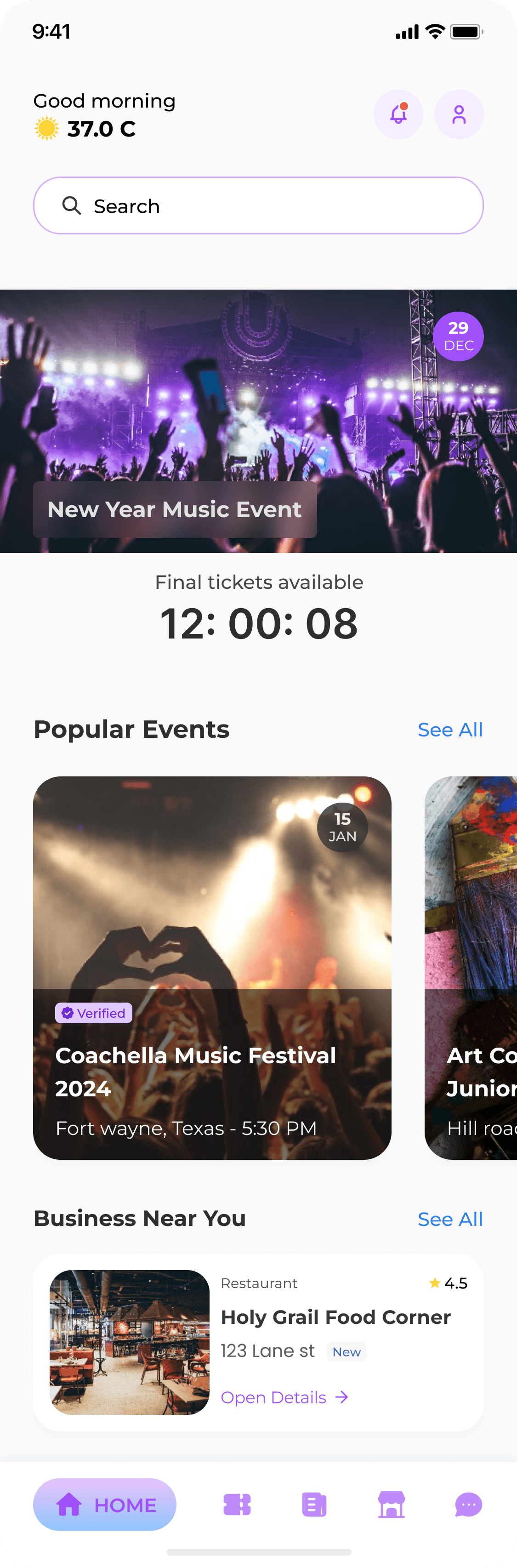
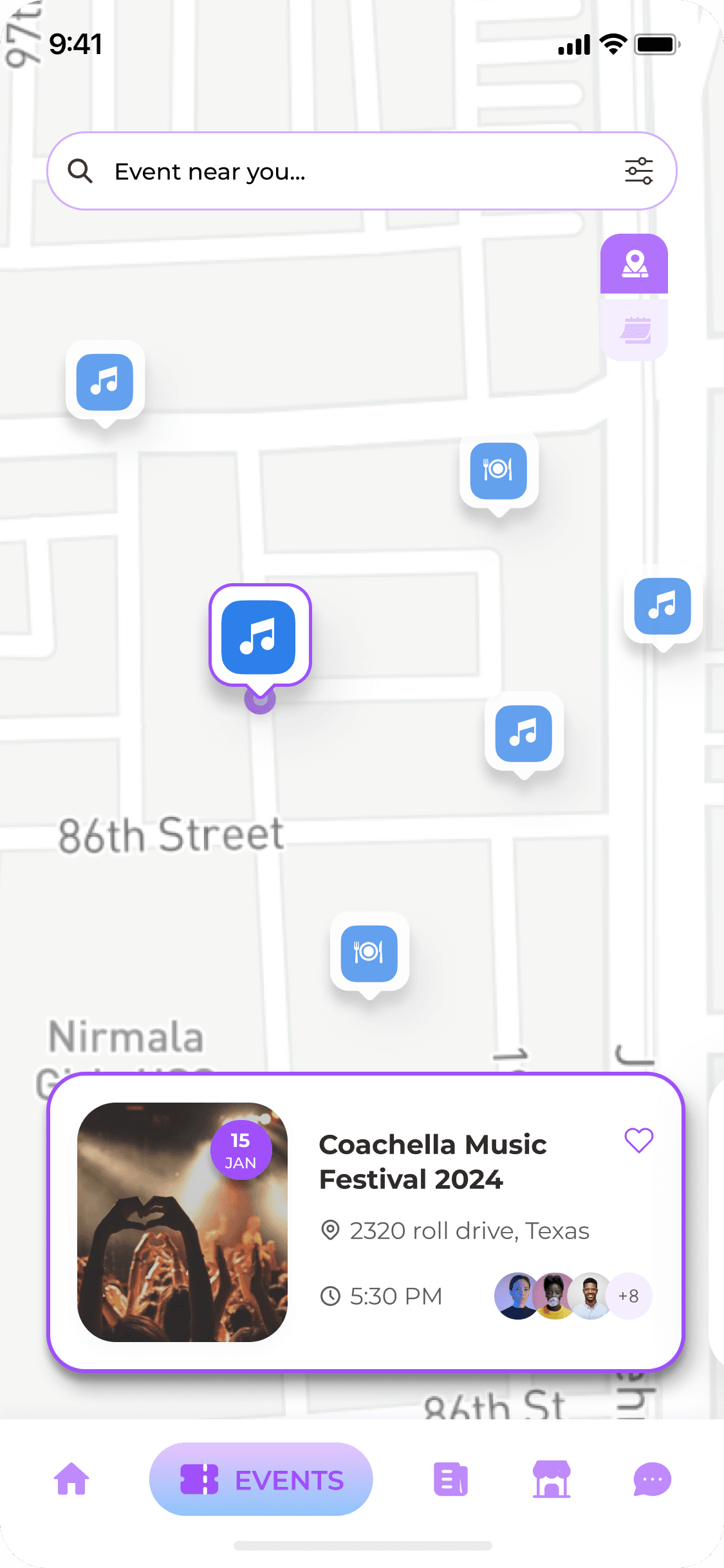
The home screen and map view help users quickly explore nearby events, with verified listings reducing uncertainty and helping them focus on what’s relevant.
Refining Event Results
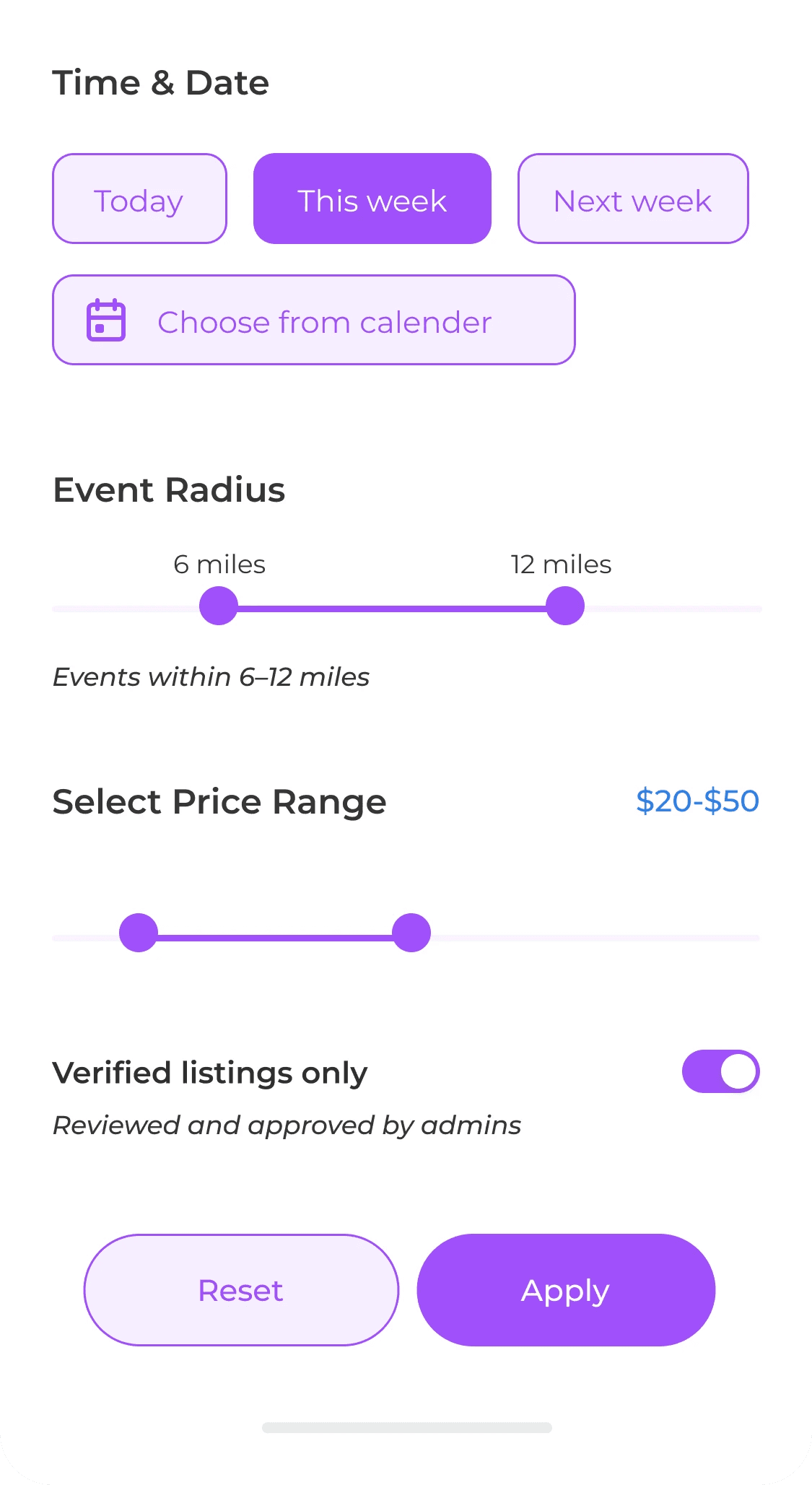
Users can refine results using time, distance, price, and trust filters, reducing noise and focusing only on relevant events.
Evaluating Event Details
Users review key details like timing, location, and organizer credibility to decide if the event is worth attending. Trust signals and social indicators reduce uncertainty and support confident decisions.
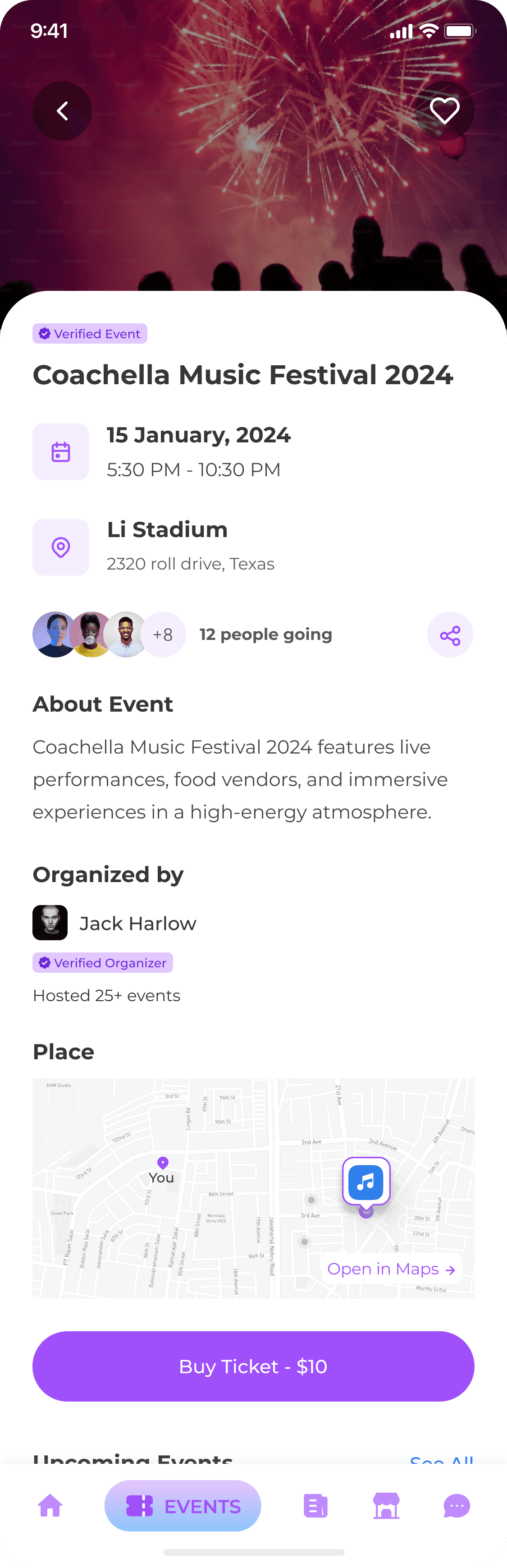
Why this Works
Structuring the experience into discovery, refinement, and evaluation reduces cognitive load and helps users progressively narrow down options, leading to faster and more confident decisions.
FLOW 2 : EVALUATE (BUSINESS)
Evaluating Local Businesses
While discovery helps users find nearby businesses, a key challenge is determining which ones are trustworthy. Without clear credibility signals, users hesitate to engage or take action.
Design Decision
I focused on helping users evaluate credibility by combining trust signals, business context, and available opportunities in a single view, so they can quickly decide whether to engage or take action.
Exploring Nearby Businesses
Users can explore nearby businesses through map-based discovery, allowing them to quickly understand what’s available in their area. Filters and spatial context help narrow down options and surface what’s most relevant.
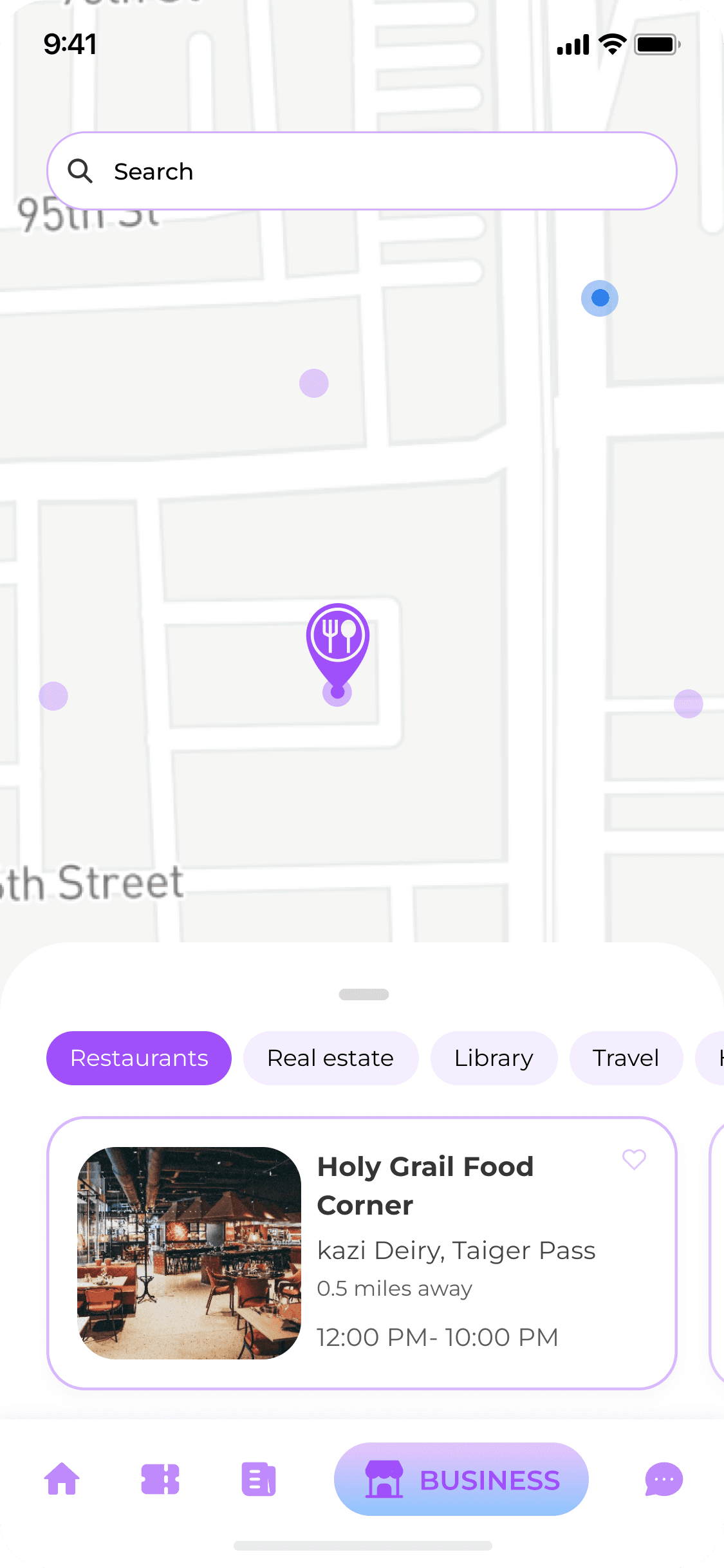
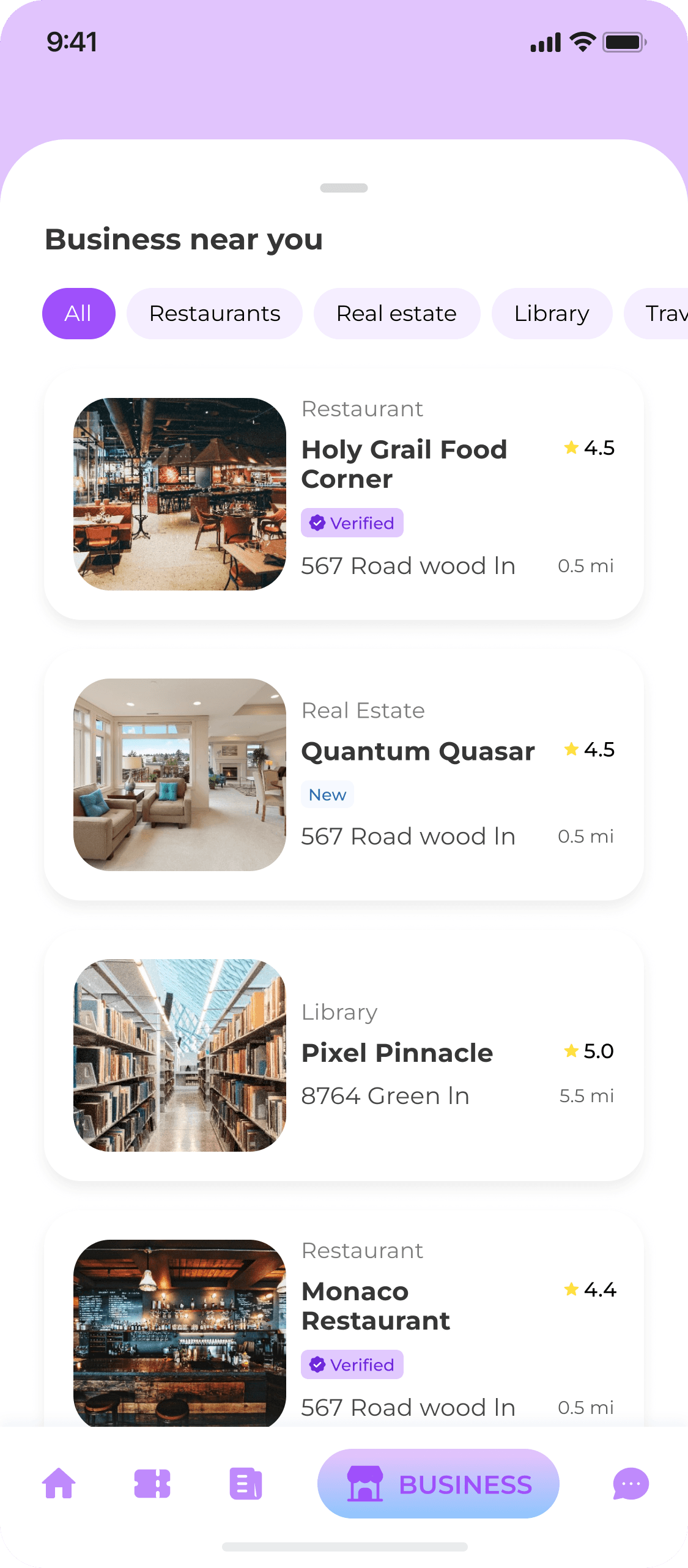
Scanning and Comparing Businesses
Users can quickly scan and compare nearby businesses through structured listings. Key signals like ratings, distance, and verification help reduce uncertainty and allow faster shortlisting without opening each option.
Helping Users Trust Before They Act
Users often hesitate when business credibility is unclear. By surfacing verification, ratings, ownership, and key context upfront, this view helps users build trust quickly and move forward with confidence.
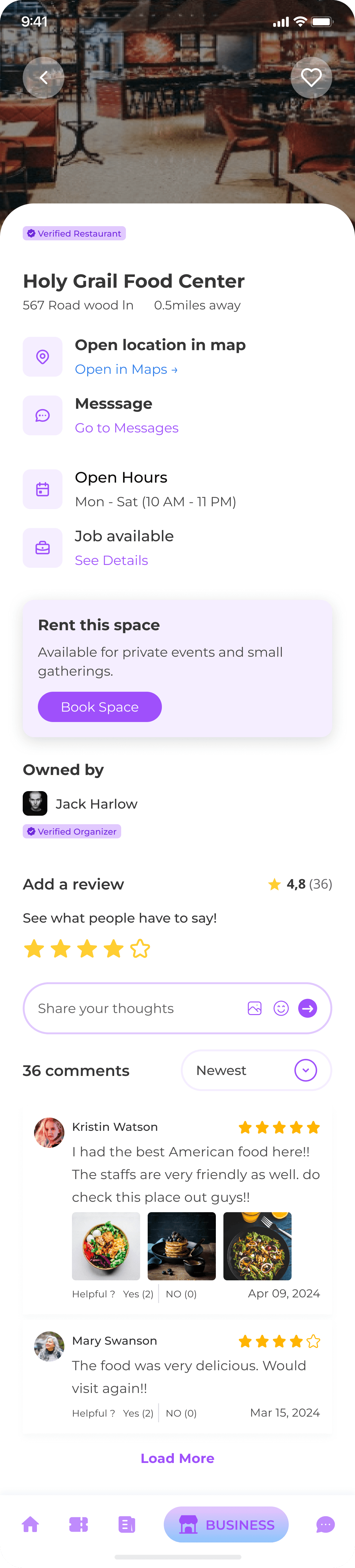
Why this Works
Most platforms separate discovery, validation, and action, forcing users to verify credibility across multiple sources. Bringing trust signals, context, and actions into a single view removes that friction and supports faster decision-making.
FLOW 3 : ACT (RENTING SPACE)
Requesting a Space
Users looking to rent a space struggle to move forward because availability is not clearly visible and the booking process lacks structure. Without knowing which time slots are actually available, users are forced to guess or initiate incomplete requests, which leads to back-and-forth communication, delays, and often abandonment before a booking is confirmed.
Design Decision
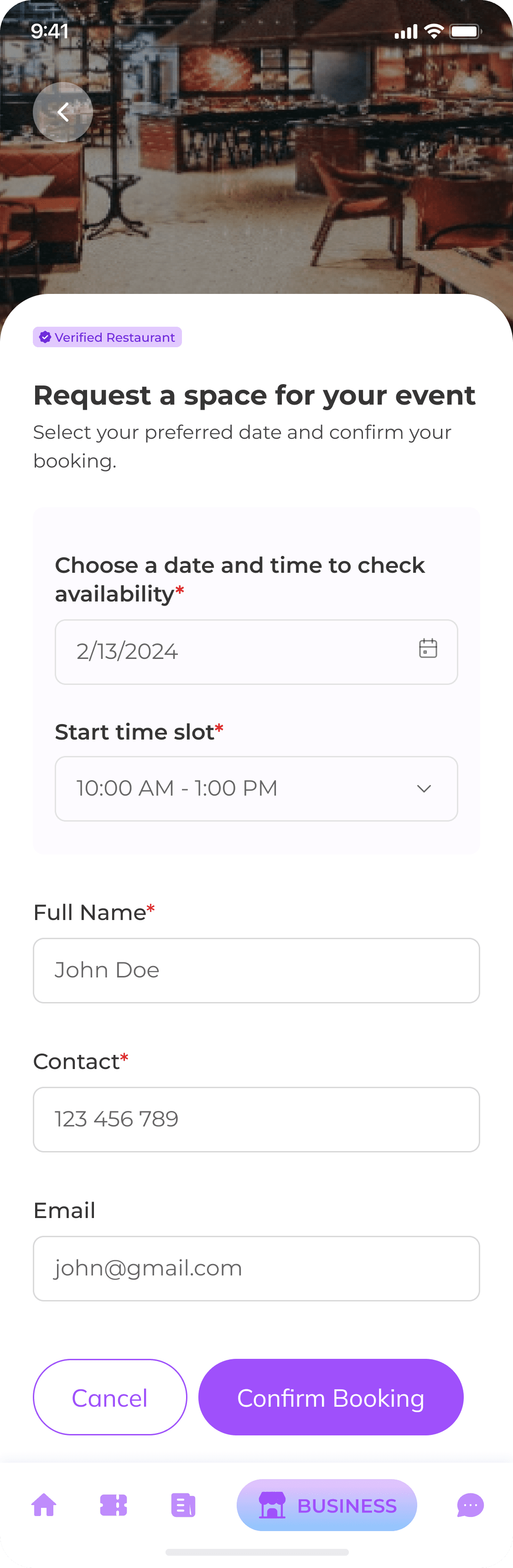
I addressed the uncertainty by exposing availability upfront, so users can select valid time slots instead of guessing. Then I structured the booking request to capture all necessary details in one step, reducing back-and-forth and making the process faster and more reliable.
Submitting a Booking Request
Users select date and time first, then add contact details. This ensures availability is defined upfront and prevents incomplete or low-intent requests.
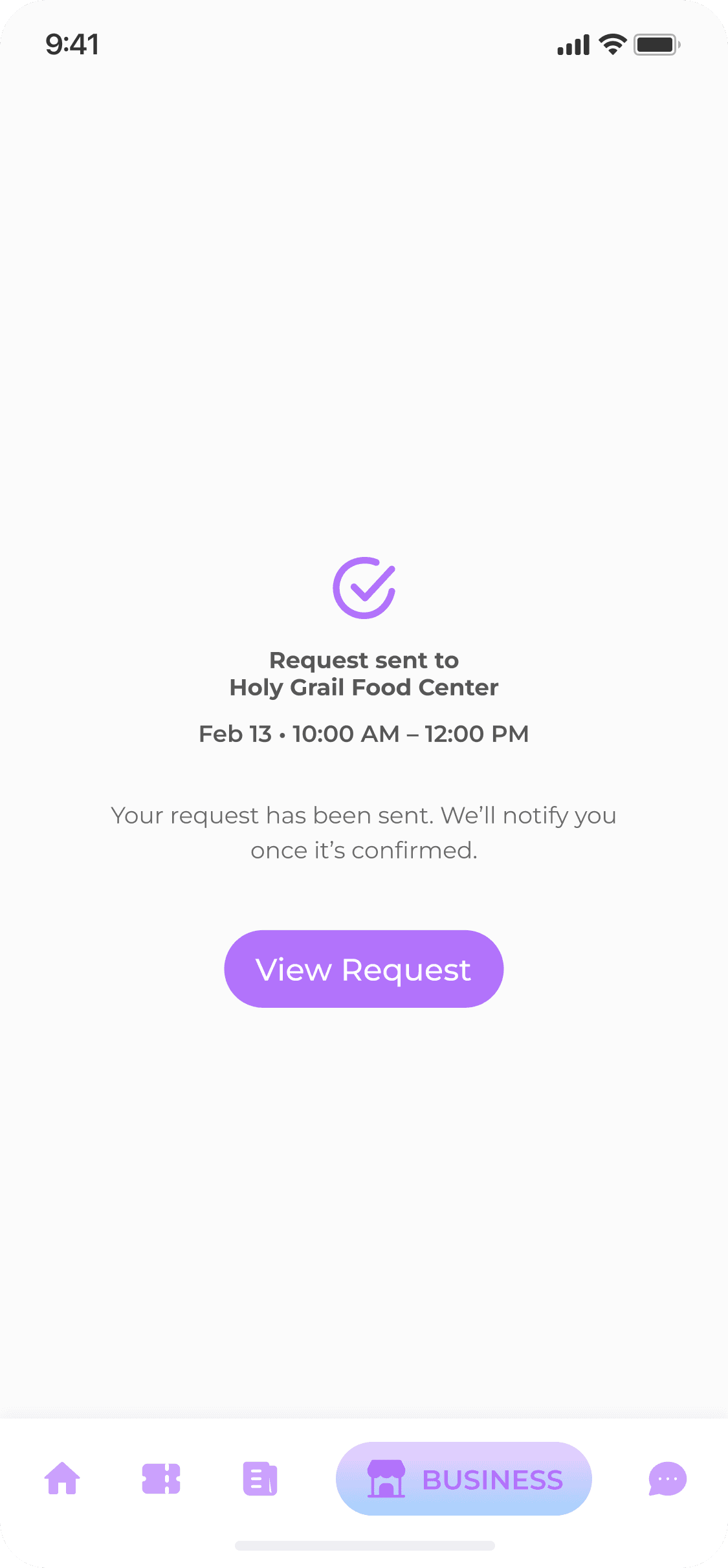
Confirmation & Next Steps
After submission, users immediately see what was sent and what happens next. This removes uncertainty and keeps the flow feeling complete.
Why this Works
By structuring booking as a guided request, the flow reduces ambiguity and forces early commitment. This leads to clearer requests, fewer drop-offs, and more reliable responses from businesses.
Iteration & Refinement
Initial Observation
Users were able to complete the booking flow, but often paused after submission, unsure whether their request was successful or what would happen next.
Refinement
I refined the confirmation state to clearly indicate request status, surface key booking details (date, time, business), and communicate next steps.
Impact of Change
This reduced uncertainty at the end of the flow and reinforced trust by making the system response clear and predictable.
Similar principles of clarity and structure were applied across discovery and evaluation flows, with this refinement highlighting how small gaps in system feedback can impact user confidence.
Validation & Impact
Usability testing and cognitive walkthroughs revealed a drop in user confidence at the point of action due to unclear system feedback. I addressed this by prioritizing availability in booking and strengthening confirmation states. This reduced hesitation and improved usability from 65 → 93 SUS.
Usability Improvement (SUS Score)
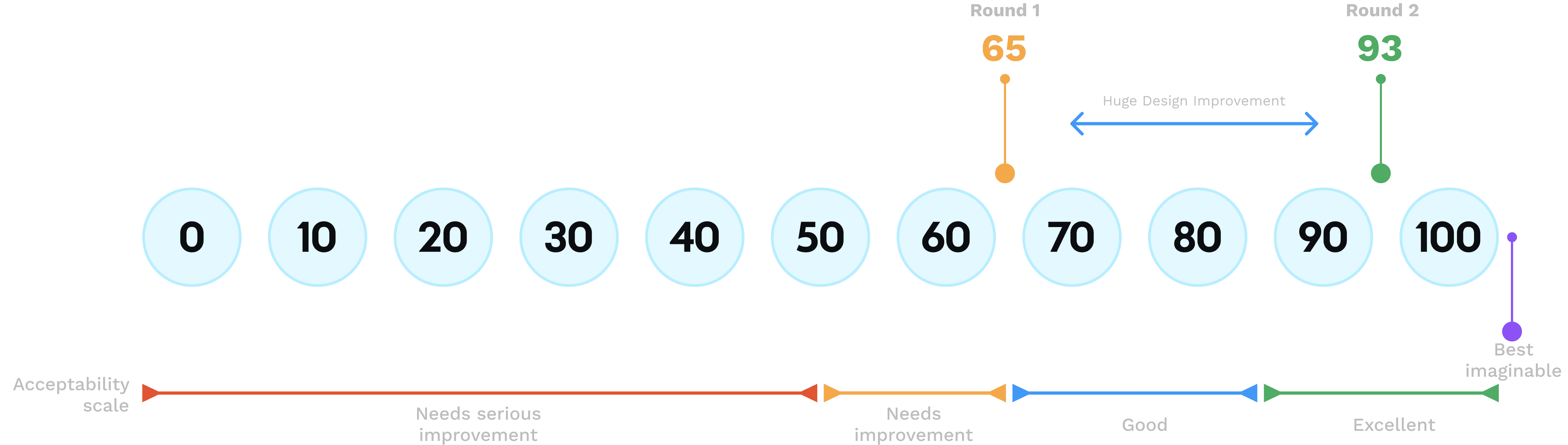
SUS improved from 65 → 93 after refining booking clarity and system feedback.
Usability Testing Sessions
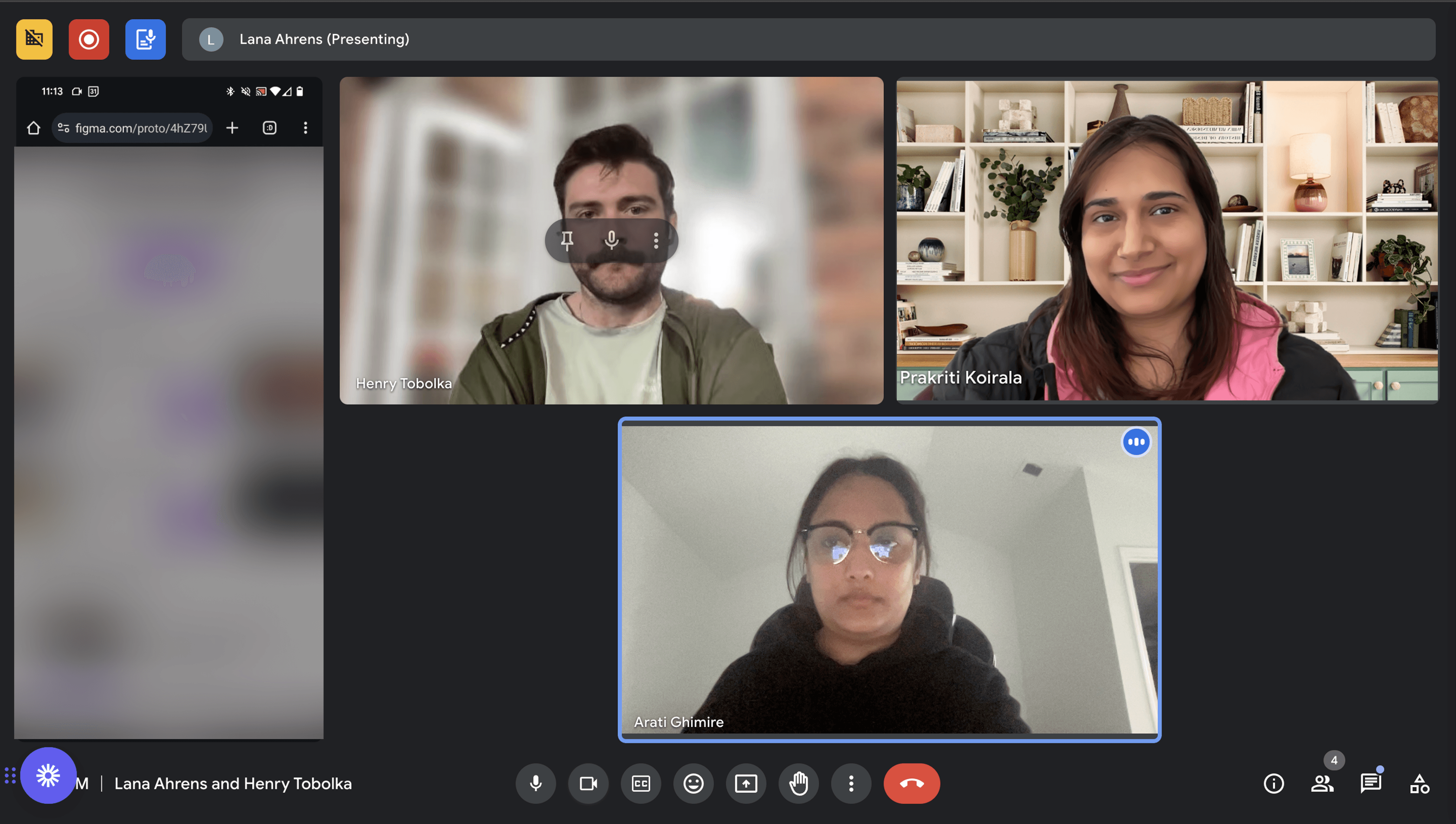
Conducted moderated sessions to observe behavior and validate design decisions.
Note: This is one of the many user testing that was done!
Key Takeaways
01
Designing around decision stages (not screens) creates clearer, more predictable user flows.
02
Structuring inputs early improves both user intent and downstream system efficiency.
03
Clear system feedback at commitment points is critical for building trust and reducing hesitation.
Explore More Projects
Next Project
Interested in working together?
If you’re working on something where clarity matters, I’d love to connect.